Quartz Ring For Etching Equipment
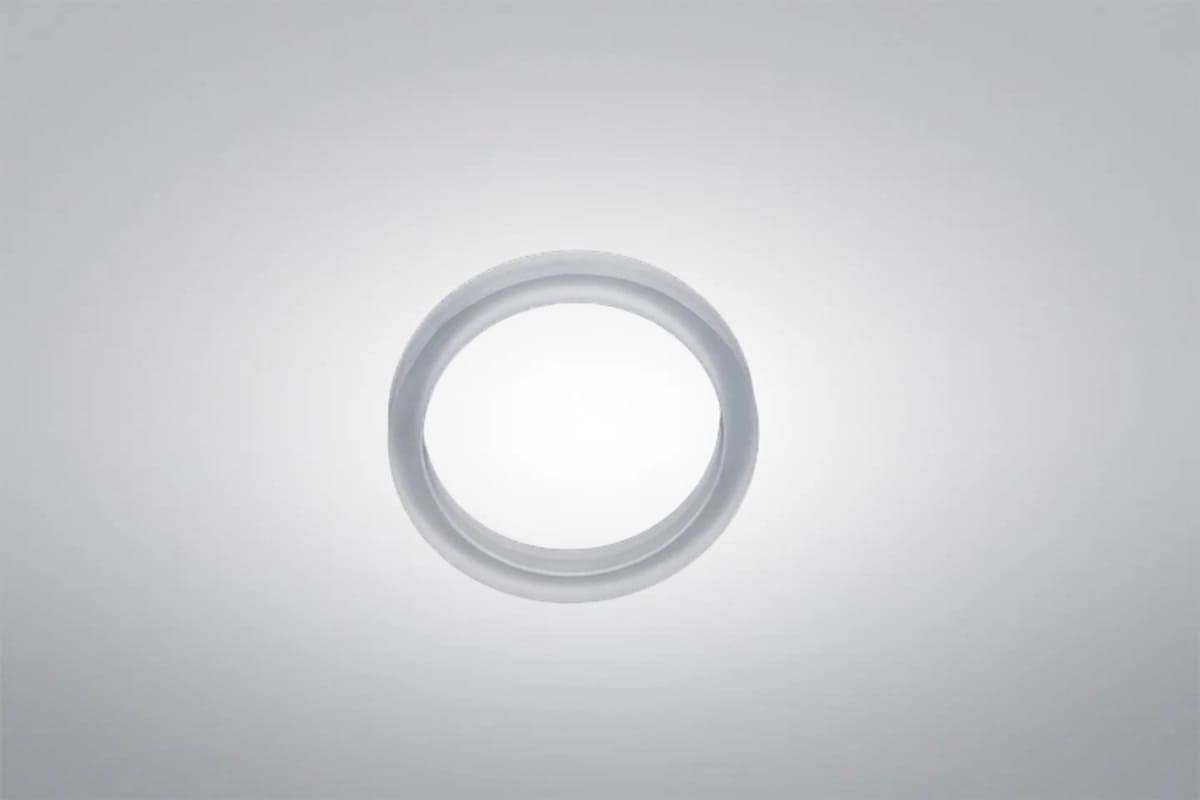
Quartz Ring For Etching Equipment
Purity: 99.99%
- Custom sizes and standard sizes in stock
- Quick Lead Time
- Competitive Price
Quartz Ring For Etching Equipment is made from high-purity fused silica, offering exceptional thermal stability, low thermal expansion, and strong resistance to thermal shock. It maintains its strength and structure even under rapid temperature changes and harsh chemical environments. With excellent dielectric properties and high purity, quartz ceramic ring is widely used in semiconductor manufacturing, high-temperature insulation, and chemical processing systems. As a leading supplier and manufacturer of premium quartz products, Shanghai Yuepeng can supply high-quality quartz ring for etching equipment with various specifications and competitive prices, offering customized solutions to meet specific requirements.
Quartz Ring For Etching Equipment Data Sheet
| Color: | White – transparent |
| Dimension(inch): | 2, 4, or customized |
| Outer Dimeter(mm): | 50.8, 101.6 or customized |
| Thickness(mm): | 3, 4, or customized |
| Purity: | 99.99% |
Quartz Ring For Etching Equipment Description
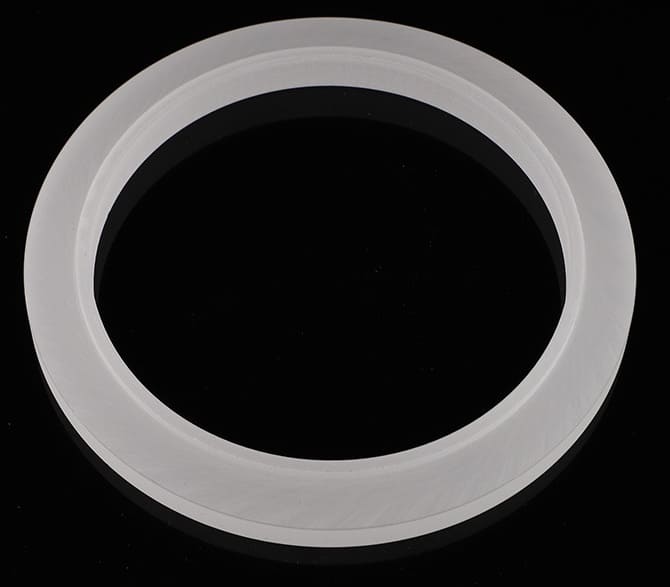
Quartz ring for etching equipment is a high-purity, precision-engineered component designed for use in semiconductor etching processes. Made from synthetic or fused quartz, it offers excellent thermal shock resistance, low thermal expansion, and superior chemical stability in plasma environments. This makes it especially suited for reactive ion etching (RIE) and deep reactive ion etching (DRIE), where high purity and dimensional stability are critical. Its smooth surface finish and tight dimensional tolerances help maintain plasma uniformity, reduce particle contamination, and extend equipment life
Quartz Ring For Etching Equipment Features
- High purity: Composed of high-grade fused silica, ensuring low contamination and excellent thermal stability.
- Low thermal expansion: Maintains dimensional integrity even under rapid temperature changes.
- Excellent chemical resistance: Withstands acids and most corrosive environments.
- Superior dielectric properties: Ideal for high-voltage and high-frequency electrical insulation.
- Smooth surface finish: Reduces particle accumulation, suitable for cleanroom and semiconductor use.
Quartz Ring For Etching Equipment Applications
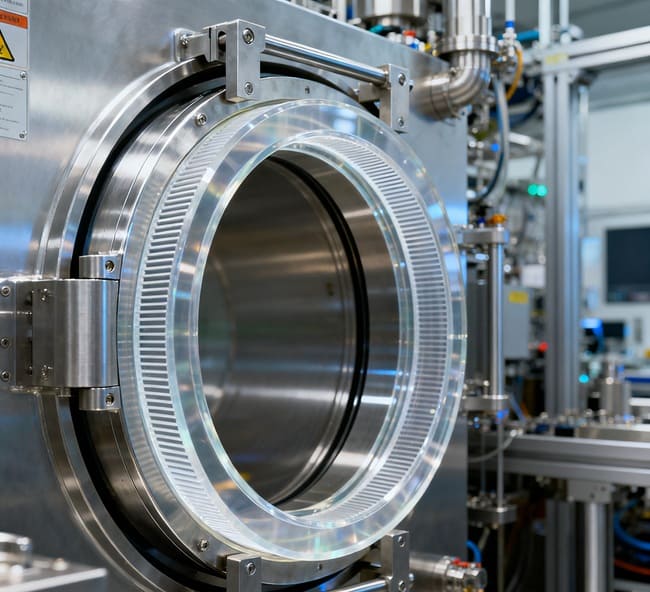
- Semiconductor Etching: Quartz Rings are widely used in plasma and dry etching equipment to provide excellent insulation and withstand harsh plasma conditions during wafer processing.
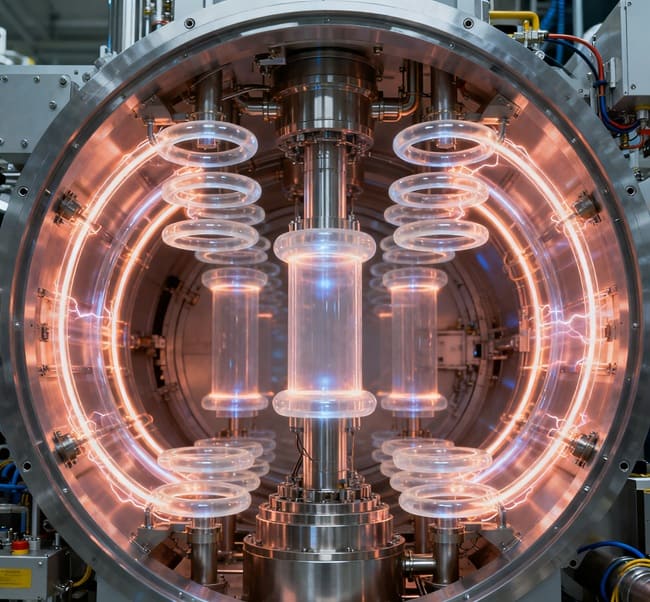
- Chamber Protection: They act as protective barriers inside etching chambers, preventing damage or contamination to critical metal components and extending equipment service life.
- Uniform Etching Performance: The high purity and smooth surface of Quartz Rings help maintain consistent plasma distribution, ensuring stable and uniform etching results across wafers.
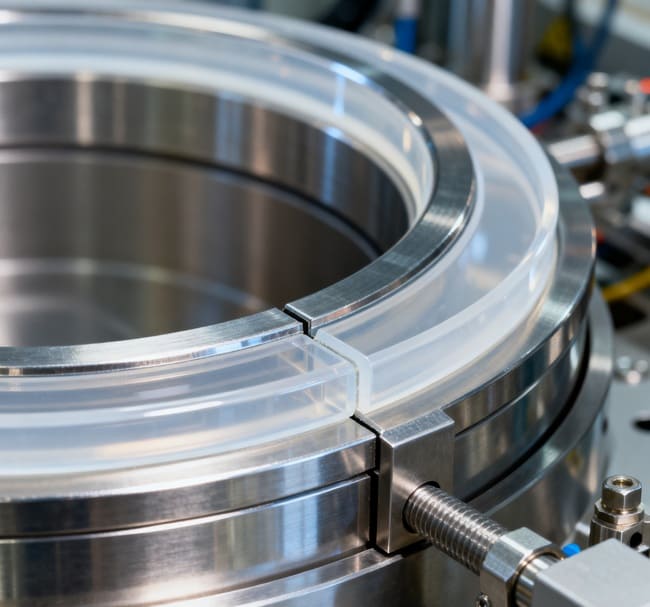
- High-Temperature Processing: Quartz Rings can operate under extreme temperatures without deformation, making them reliable for continuous use in thermal or plasma-based etching systems.
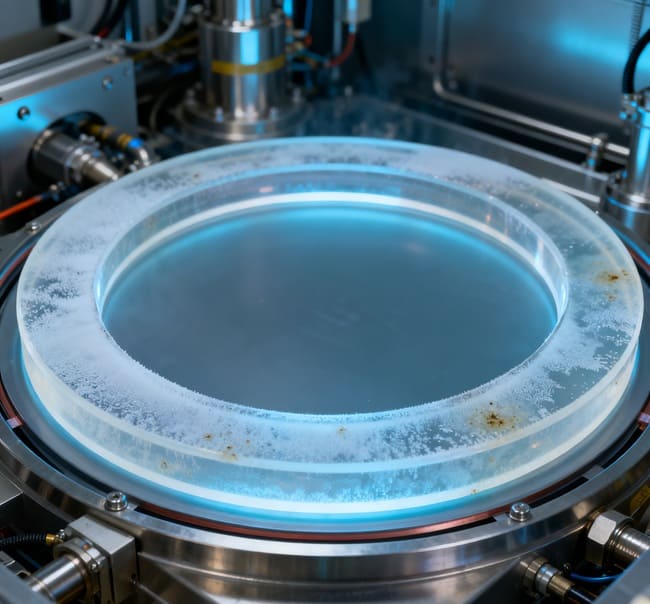
- Chemical Resistance: Their outstanding resistance to acids, halogens, and reactive gases makes them suitable for aggressive etching environments in semiconductor and microfabrication industries.
 Chamber Protection
 Chemical Resistance
 High-Temperature Processing
 Semiconductor Etching
 Uniform Etching Performance

Quartz Ceramic Material Properties
| Purity (%) | >99.8 | >99.5 |
| Density (g/cm3) | 1.9-1.95 | 1.9-1.95 |
| Flexture strength (MPa) | 28 | 28 |
| Compressive strength (MPa) | >50 | >50 |
| Bending strength (MPa) | 25 | 25 |
| Maximum working temperature (℃) | 1650 | 1650 |
| Thermal conductivity (W/m*K) | <1 | <1 |
| Thermal expansion coefficient (/℃) | 8.5*10-7 | 8.5*10-7 |
| number of use | ≥10 | ≥10 |
Quartz Ceramic Material Machining
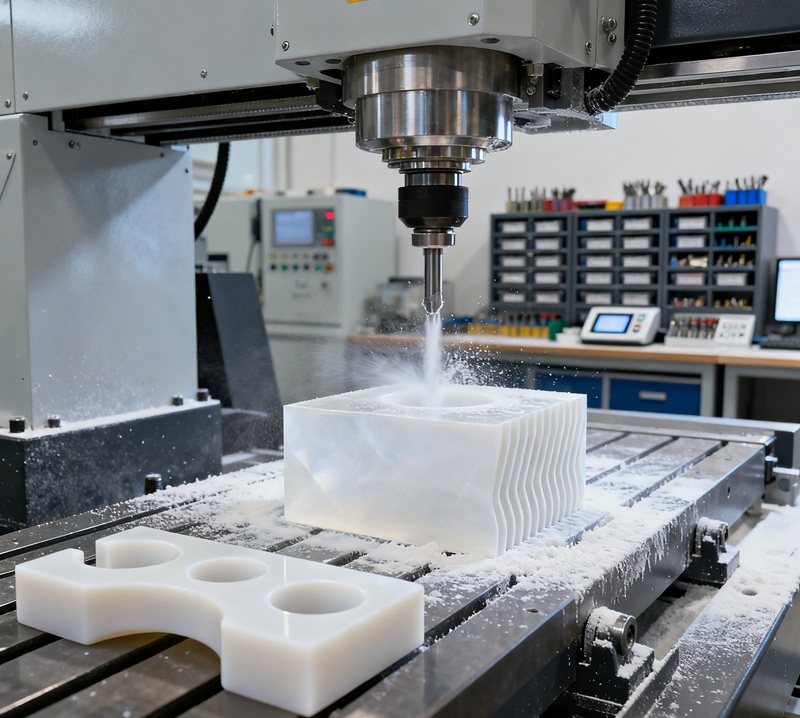
Quartz ceramic material can be machined in its green or bisque state before sintering, making it easier to shape into complex forms. Like other ceramics, it shrinks by about 15–20% during sintering, so this must be considered in the initial design. After sintering, quartz ceramic becomes extremely hard and brittle, making machining very difficult and requiring diamond-coated tools and high-precision equipment.
Machining Methods and Considerations
- Green or Bisque Machining: Quartz ceramic is easier to cut and shape before sintering, making it suitable for intricate designs.
- Sintering Shrinkage: Expect a 15–20% size reduction during sintering, which affects dimensional accuracy.
- Post-Sintering Machining: After sintering, quartz becomes hard and brittle, requiring diamond tools and precise control.
- Fragility: Fully sintered quartz ceramic is prone to chipping or cracking if mishandled.
- Tooling and Time: Machining sintered quartz is slow and requires specialized equipment.
Quartz Ceramic Packaging
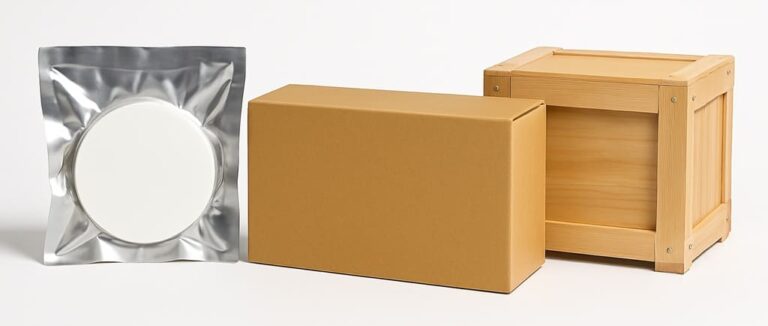
Quartz ceramic products are typically packaged in vacuum-sealed bags to prevent moisture or contamination and wrapped with foam to cushion vibrations and impacts during transport, ensuring the quality of the products in their original condition.
Download
Get A Quote
We will check and get back to you in 24 hours.